

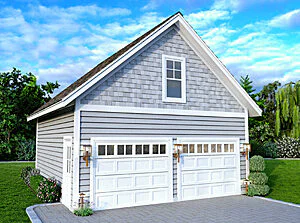
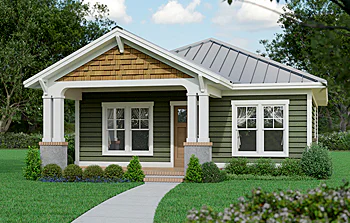
The backyard used to be where old lawn furniture went to die. Now it’s some of the most valuable real estate on the property.
Accessory dwelling units (ADUs) have become increasingly popular lately. What used to be a workaround — a converted garage, a cramped in-law suite bolted onto the back of the house — has quietly become one of the most intentional investments homeowners are making. At SDC House Plans, we’ve watched that shift happen in real time. The conversation has moved from “can we fit one?” to “how do we do this right?”, and the designs people are asking for have evolved right along with it.
Here’s what buyers are actually prioritizing when they sit down to look at plans.
Flexibility is the whole point
The most consistent thing homeowners say about their ADU goals is that their needs are going to change. A guest cottage today might house aging parents in five years, an adult kid home from college the year after that, and eventually a long-term renter when the nest empties out for good.
That kind of flexibility has to be designed in from the start. Private entrances matter. So does having a real kitchen — not a kitchenette — along with laundry and at least a small dedicated outdoor space. The goal is a unit that functions independently, not one that constantly reminds both households they’re sharing a property.
Small doesn’t have to feel small
There’s been a real shift in how buyers think about square footage. The ask isn’t just “make it bigger.” It’s “make the space work harder.” Most buyers are shopping in the under-1,200-square-foot range and still expecting two bedrooms, a full bath, decent storage, and a layout that doesn’t feel like a puzzle.
What makes that work is usually a combination of vaulted ceilings, larger windows, open living areas, and floor plans that skip the wasted hallway square footage. Done well, a 900-square-foot ADU can feel genuinely comfortable, not like a compromise.
Style that fits the property
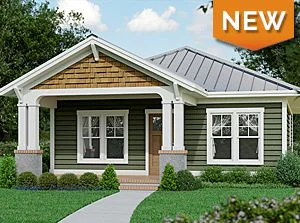
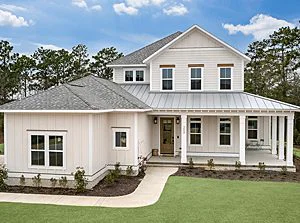
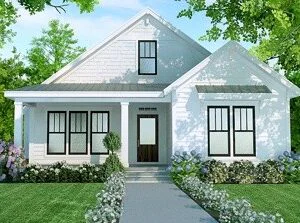
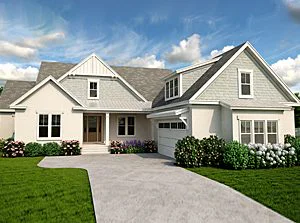
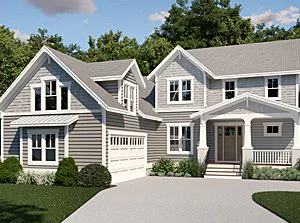
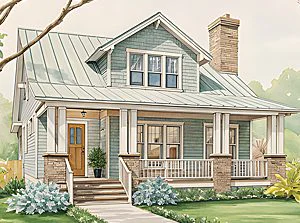
Most homeowners want the ADU to feel like it belongs on the lot, not like it was dropped there from somewhere else. Modern farmhouse remains the most popular direction: board-and-batten siding, metal roof accents, a covered porch, and clean proportions. It photographs well, it ages well, and it works with a lot of existing home styles.
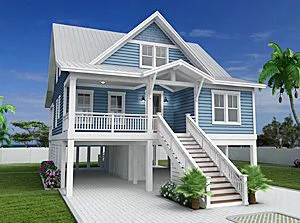
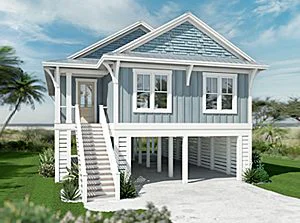
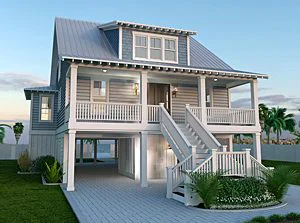
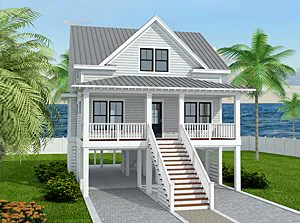
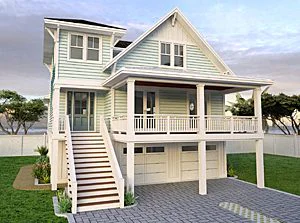
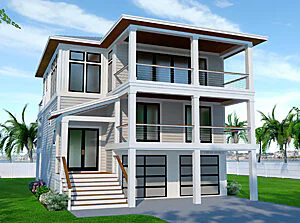
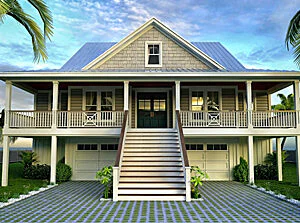
Coastal-influenced designs have picked up steam too, particularly in warmer climates and vacation-adjacent markets. Wide porches, elevated foundations, light exterior palettes, and layouts oriented toward natural light and outdoor flow. These tend to attract strong rental interest as well.
Designing with aging in mind
A growing number of buyers aren’t building an ADU for right now. They’re building it for a parent who’s going to need it in a few years, or for themselves down the road. That’s changing what people ask for.
Single-level layouts have become almost non-negotiable in this segment. Wider doorways, walk-in showers, minimal thresholds, bedrooms and bathrooms on the main floor: these features are showing up even in plans where accessibility isn’t an immediate need. Buyers have figured out that building it in now costs far less than retrofitting later.
Rental potential shapes the design
For a lot of buyers, an ADU has to at least partially pay for itself. That shapes decisions from the floor plan on down. Two-bedroom units consistently outperform one-bedrooms in rental markets because they open the door to small families, roommates, and traveling professionals, not just solo renters.
The finishes tend to lean toward durable rather than precious. Compact but thoughtfully appointed kitchens. Low-maintenance exteriors. Private parking if the lot allows. Energy-efficient systems that keep utility costs manageable for tenants. None of this means cutting corners on quality. Renters notice, and so does resale value.
Outdoor space earns its keep
Square footage inside only goes so far. At a certain point, what’s right outside the door matters just as much, maybe more. A covered porch gives people a reason to sit outside in the rain or the heat. A simple patio with room for a table and a few chairs adds to the daily quality of life in a way that doesn’t show up in the floor plan but absolutely shows up in how the place feels.
Screened porches have been coming up more and more in design conversations lately, and it’s not hard to see why. They’re usable for more of the year, they keep the bugs out, and they give smaller homes a genuinely comfortable outdoor room rather than just a landing spot. Same idea with sliding glass doors. When inside and outside can breathe together, the whole unit feels less contained.
Energy efficiency isn’t an afterthought
A smaller home already has a head start. Less square footage to condition means lower baseline costs. But buyers aren’t content to just take what comes with the territory. Solar panel compatibility, tankless water heaters, better-than-code insulation, smart thermostats: these have shifted from upgrade requests to baseline expectations for a lot of people shopping plans right now.
Some of it is principal. Most of it is math. A tenant who’s paying their own utilities will absolutely factor operating costs into whether they stay or go. An owner-occupant is looking at those numbers every month for the life of the building. Either way, the long-term savings are real, and buyers have started treating upfront efficiency investments as exactly that — investments, not extras.
The customization expectation
Perhaps the biggest shift is that buyers no longer expect to take a plan as-is. There are too many variables for a one-size approach to make sense. The starting point might be an existing plan, but the expectation is that it’s a starting point.
That kind of built-in flexibility, where a well-designed plan can be adapted without starting from scratch, is one of the things that separates plans people actually build from ones that sit in a folder.
Plan ahead with SDC
ADUs have grown up. The buyers coming into the market now know what they want (functional layouts, real style, outdoor living, long-term adaptability), and they’re not settling for less just because the square footage is smaller.
At SDC House Plans, every plan in our ADU and guest cottage collection is designed in-house, which means they can actually be customized to fit your lot, your goals, and whatever you’re planning to do with the space five years from now.
If you’re starting to think seriously about adding an ADU to your property, browse our full collection and see what the right plan looks like for you.