
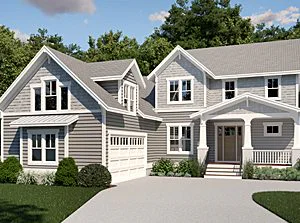
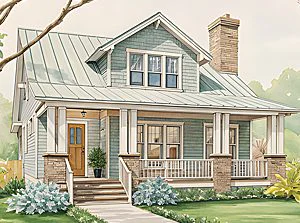
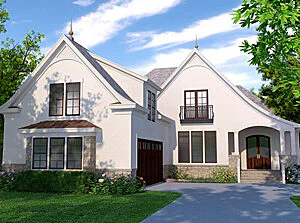

Building a home near the coast comes with challenges that homeowners farther inland may not face. Salt air, high humidity, strong winds, driving rain, and flooding can all affect how well a home holds up over time. Metal hardware can corrode, wood can deteriorate when moisture becomes trapped, and exterior finishes may fade or require more frequent maintenance.
Choosing the right materials can help prevent these problems, but there is no universal material package for every coastal property. A home directly on the oceanfront has different needs than one several miles inland. Your property’s exposure, local building requirements, budget, and home design should all influence your decisions.
The goal isn’t necessarily to choose the most expensive materials. It’s to understand where investing in better protection makes a difference and which construction details deserve attention before building begins.
Start With Your Property’s Exposure
Before comparing siding, roofing, windows, or decking, consider where you’re building.
Oceanfront homes experience direct salt spray, strong onshore winds, and blowing sand. These conditions can accelerate corrosion and wear, making corrosion-resistant hardware, durable exterior finishes, and properly rated building components especially important.
Homes near sounds, inlets, or protected waterways may have less direct exposure to salt spray, but humidity, wind-driven rain, and flooding can still be concerns. Farther inland, salt exposure generally decreases, although heavy rainfall, intense sunlight, and hurricane-related winds remain relevant.
Distance from the shoreline isn’t the only factor. Wind direction, surrounding buildings, vegetation, and property elevation can all affect exposure. Discuss your specific building site with a local builder or engineer before finalizing your material selections.
Choosing Exterior Siding
Siding protects the home’s exterior walls from rain, sunlight, wind, and moisture. In coastal environments, it also needs to withstand salt exposure without requiring constant repairs.
Fiber cement is a popular option because it doesn’t rot like traditional wood and is generally resistant to moisture-related deterioration. It comes in several styles, including lap siding, shingles, and panels. Products such as James Hardie’s HZ10 line are designed for climates with high humidity and rainfall.
Fiber cement still requires proper installation. Clearances, flashing, joints, and cut edges must follow manufacturer specifications, and painted finishes will eventually need attention.
Vinyl siding is another option, particularly for homeowners managing construction costs. It doesn’t absorb water or require regular painting, but its performance depends heavily on product quality and installation. Look for documented wind ratings and warranties that apply to your property’s exposure.
Wood siding provides a traditional coastal appearance, but it generally requires more maintenance. Cedar and other durable woods can perform well when properly installed and protected, although regular inspections, painting, or staining are necessary to protect against moisture and sunlight.
Metal siding can also be suitable when it has the right protective finish. Aluminum doesn’t rust like ordinary steel, but it can still corrode under certain conditions. Scratches, exposed edges, and incompatible fasteners can create weak points.
For many coastal homes, fiber cement offers a practical balance of durability, appearance, and maintenance. The best choice ultimately depends on exposure and installation quality.
Choosing the Right Roofing Material
Your roof needs to withstand wind uplift, driving rain, intense sunlight, and potentially windborne debris. Its appearance matters, but performance should come first.
Metal roofing is popular in coastal construction because it is relatively lightweight and can provide a long service life when properly selected and installed. Standing-seam systems are particularly common on coastal and contemporary homes.
Not all metal roofing performs equally near saltwater. Aluminum is worth considering for highly exposed locations because it doesn’t develop iron rust. Coated steel can also work, but its performance depends on the base metal, coating, fasteners, and maintenance.
Architectural asphalt shingles are another option. They typically cost less initially than standing-seam metal and offer a wide range of styles. Higher-quality shingles with appropriate wind ratings may be a reasonable choice for properties with less direct ocean exposure.
Concrete and clay tile offer durability and resistance to rot, but they are heavy. The home’s structure must be designed to support the additional weight, and the tiles need an attachment system suitable for local wind requirements.
Compare more than the advertised lifespan. Consider installed cost, structural requirements, wind performance, corrosion resistance, maintenance, and eventual replacement costs.
Windows, Doors, and Exterior Hardware
Large windows and sliding doors are common features in coastal homes because they maximize natural light and water views. However, they also introduce important decisions about wind protection, water resistance, and energy efficiency.
Impact-rated windows use laminated glass designed to remain in place when struck by windborne debris. They can eliminate the need to install separate storm panels before every storm, although they typically cost more initially.
Hurricane shutters offer another approach. They may cost less than installing impact-rated glass throughout the home, but they require storage, maintenance, and time to deploy.
Pay attention to window frames and exterior doors as well. Look for products with ratings appropriate for the site’s wind pressure, water penetration, and air infiltration requirements. Proper flashing and sealing around openings are just as important as the products themselves.
Don’t overlook the hardware holding everything together. Salt and moisture can accelerate corrosion in screws, nails, bolts, brackets, hurricane ties, deck connectors, and railings.
Type 316 stainless steel generally offers better resistance to chloride corrosion than Type 304 stainless steel, making it worth discussing for highly exposed applications. The right specification depends on the location, material, and connector manufacturer’s requirements. Incompatible metals can also contribute to galvanic corrosion, so fasteners and connectors should be selected as part of the overall material package.
Decking, Porches, and Exterior Trim
Porches and outdoor living spaces are a major part of coastal home design, but they experience considerable moisture and sunlight.
Pressure-treated lumber is a relatively affordable option for decks and porches. It resists decay and insect damage, but still requires proper drainage, ventilation, and maintenance. It may also warp, split, or need periodic refinishing.
Composite decking generally requires less sealing and staining than wood and resists rot and insects. However, it can collect dirt and mildew, and some products become hot in direct sunlight.
Tropical hardwoods such as ipe offer natural resistance to decay but come at a higher price. They also require careful installation and may change color as they weather.
For exterior trim and porch ceilings, fiber cement and cellular PVC can reduce the maintenance associated with traditional painted wood. Regardless of the material, proper flashing and clearances are essential to prevent trapped moisture.
When evaluating a coastal house plan, consider the construction requirements of its porches, railings, columns, and roof structures, not just the additional outdoor living space they provide.
Foundations and Materials in Flood-Prone Areas
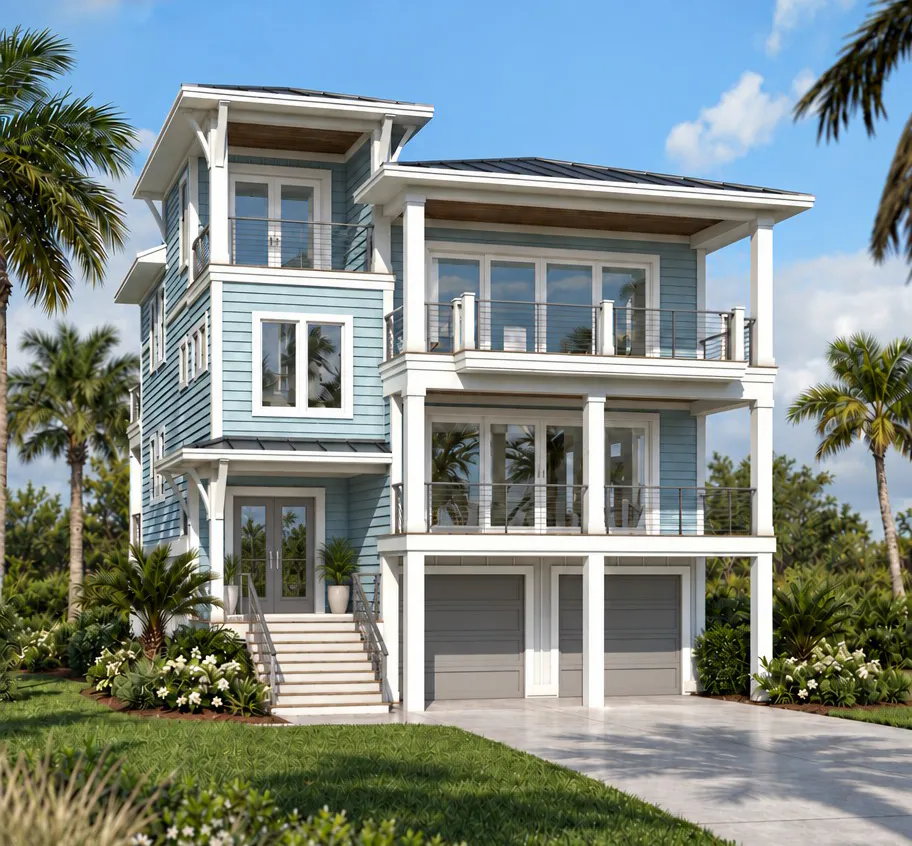
Flood risk can significantly influence how a coastal home should be designed. Before choosing a foundation, understand the property’s flood zone, base flood elevation, required building elevation, and applicable local restrictions.
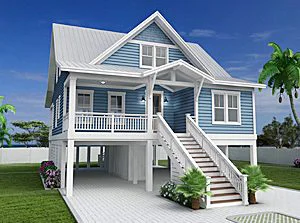
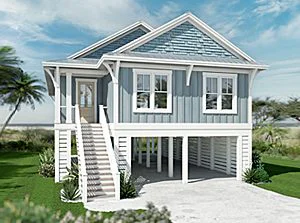
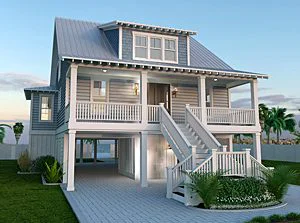
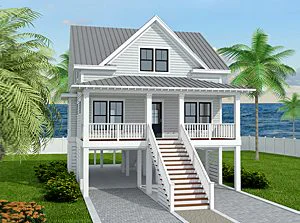
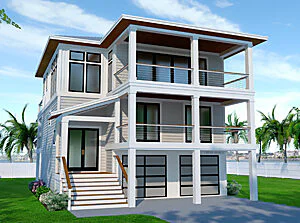
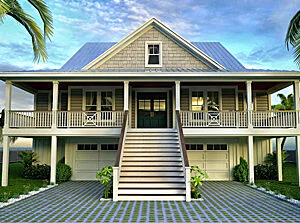
Elevated homes supported by pilings or piers are common in areas where flood conditions require them. SDC House Plans offers designs such as the Cape Lookout and Core Sound Cottage that incorporate piling foundations into their layouts.
Materials below the required flood elevation deserve special attention. Concrete, masonry, tile, and certain pressure-treated or decay-resistant wood products may be appropriate in areas exposed to flooding. Materials that absorb water or deteriorate when wet may be unsuitable.
Flood-resistant materials do not make a home floodproof. They can, however, reduce damage and make cleanup and repairs more manageable when flooding occurs. Electrical equipment, HVAC systems, and water heaters should also be positioned with flood risk in mind.
Moisture Control and HVAC Protection
Coastal homes need to manage moisture from both outside and inside. Humid air, wind-driven rain, air conditioning, and everyday household activities all affect how moisture moves through a building.
A durable wall assembly needs more than insulation. It should include a continuous water-resistive barrier, properly integrated flashing around windows and doors, and a way for incidental water to drain away rather than becoming trapped behind the siding.
Insulation choices should be considered as part of the complete wall and roof design. Fiberglass, mineral wool, and spray foam all have different characteristics. The right choice depends on the framing, ventilation strategy, air sealing, and moisture-control layers.
Outdoor HVAC equipment also deserves attention. Salt air can corrode coils, cabinets, and other metal components. Some manufacturers offer coastal-rated equipment with additional corrosion protection. Proper placement, regular cleaning, and maintenance can help extend equipment life.
Installation Quality Matters as Much as Materials
Premium materials won’t automatically produce a durable home. A high-quality window can leak if it is flashed incorrectly. Fiber cement siding can develop moisture problems if installed without the required clearances. A metal roof can lose panels if its fastening system isn’t designed for local wind loads.
The roof, walls, windows, doors, and foundation need to work together. Water must drain away from the home, exterior openings must be properly sealed, and structural connections must create a continuous load path from the roof to the foundation.
This is particularly important when starting with a stock house plan. A plan provides the layout and design, but it still needs to be reviewed for the actual building site. Wind loads, foundation conditions, flood elevations, and local building requirements may require engineering or modifications.
We recommend having plans reviewed by a local builder, architect, or engineer to determine what changes are necessary for the building location.
Balance Initial Cost With Long-Term Maintenance
The most expensive material isn’t automatically the best investment, and the cheapest option isn’t always the best way to save money.
Architectural shingles may make sense for a property with less severe salt exposure, while a standing-seam aluminum roof may be worth the additional cost on a highly exposed oceanfront property. Similarly, vinyl siding may reduce initial expenses, while fiber cement may offer a different balance of durability and maintenance.
Look beyond the purchase price. Consider how often materials need to be inspected, cleaned, painted, sealed, repaired, or replaced. Check whether warranties actually cover coastal exposure, corrosion, and the intended installation.
Sometimes, investing in corrosion-resistant connectors, proper flashing, and a well-engineered roof attachment system provides more practical value than upgrading a decorative exterior finish.
Choose Materials That Fit Your Coastal Home
The best coastal home isn’t necessarily the one built with the most expensive materials. It’s the one designed around its location, constructed with appropriate materials, and planned so that long-term maintenance remains manageable.
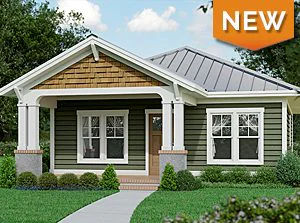
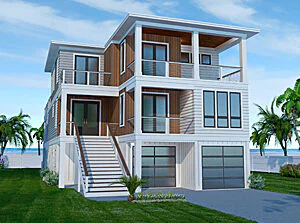
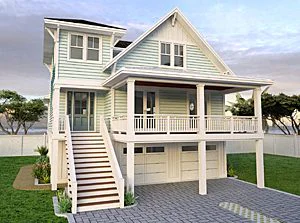
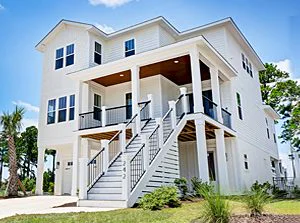
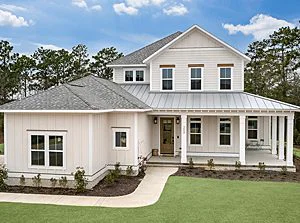
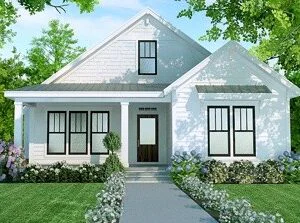
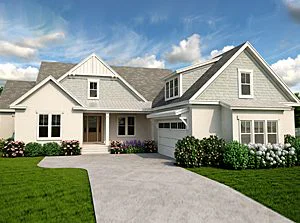
SDC House Plans offers a range of coastal designs featuring elevated foundations, covered porches, and layouts oriented toward water views. Browse the Coastal House Plans collection to compare options, including designs such as Cape Lookout and Core Sound Cottage.
If you find a design that fits your needs but requires changes for your building site, we can modify a house plan to better suit your property and preferences.