
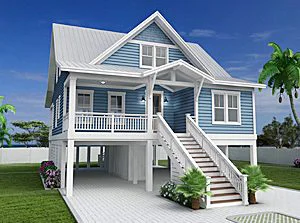
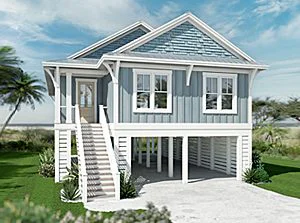
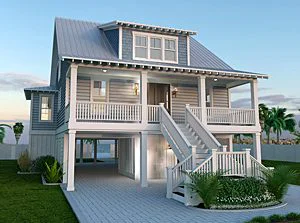
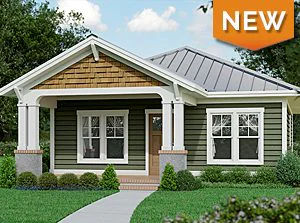

Building a home on the coast is already a major decision. Deciding whether you’ll live there year-round or escape to a few weeks a year adds another layer to the process.
The distinction matters more than you might think.
A primary coastal home and a vacation home may sit on the same kind of lot and face the same weather, but they do not necessarily need the same floor plan. The way you use the house changes what you should prioritize, from bedroom layouts and storage to maintenance, utilities, outdoor living, and even how much square footage makes sense.
A vacation home might benefit from a large open living area, extra bedrooms for guests, and generous outdoor spaces. A primary residence may need a home office, more everyday storage, a practical laundry room, and spaces that work well for your family year-round.
Neither approach is automatically better.
The better question is: What do you actually want this house to do for you?
Start With How You Will Use the Home
The first thing to figure out is whether you are building a home for everyday life or primarily for getting away.
That sounds obvious, but it affects almost every design decision that comes afterward.
If the house will be your primary residence, you are going to interact with the floor plan every day. The location of the laundry room matters. So does pantry storage, the garage, your bedroom, your home office, and the amount of space you have for everyday belongings.
A vacation home works differently.
You may have a larger number of people staying there at certain times, but the house may sit mostly empty at other times. That changes the value of certain features. A large bunk room might be extremely useful when your children and their friends visit for a week in the summer, while a dedicated office may be much more valuable if you work from home year-round.
This is why square footage alone is a poor way to compare plans.
A 2,500-square-foot home that is designed around your everyday routine can feel much more functional than a 3,500-square-foot house where the extra space is rarely used.
A Primary Coastal Home Has Different Priorities
When the coast is your permanent home, you are not just building a beach house. You are building your entire daily environment.
That means the plan needs to work beyond vacation mode.
Think about where you will put groceries when you come home. Think about where dirty beach towels will go. Think about storing bicycles, fishing equipment, lawn equipment, outdoor furniture, and other items that accumulate when you actually live at the coast.
A mudroom or larger laundry room can become much more valuable than it initially appears.
The same applies to a garage.
For a vacation property, you might be perfectly happy with a carport or smaller garage. For a primary residence, having enclosed storage for vehicles, tools, bikes, beach equipment, and household items can make the house significantly easier to live in.
Your home office may also deserve more attention.
A vacation home can get away with a small desk tucked into a bedroom or hallway. A primary residence may need a dedicated office with enough room to work comfortably and close a door when the workday is over.
These are not glamorous features, but they are the features you notice after living in a house for several years.
A Vacation Home Can Be Designed Around Gathering
A vacation home has a different job.
You may spend most of your time there with family and friends, which makes shared spaces particularly important.
An open kitchen, dining, and living area can allow everyone to stay together rather than splitting into separate rooms. Large porches and decks can effectively increase the usable living area during good weather.
Bedrooms also become more important in a different way.
If you regularly expect extended family or friends, it may make sense to have several bedrooms with nearby bathrooms rather than one enormous primary suite and relatively few guest accommodations.
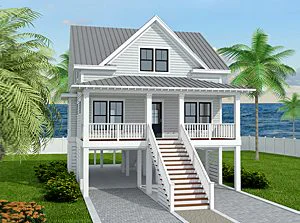
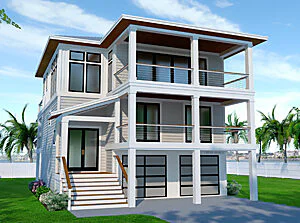
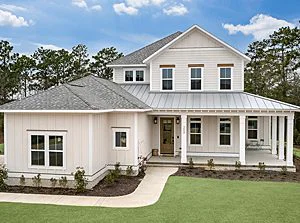
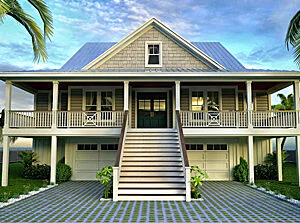
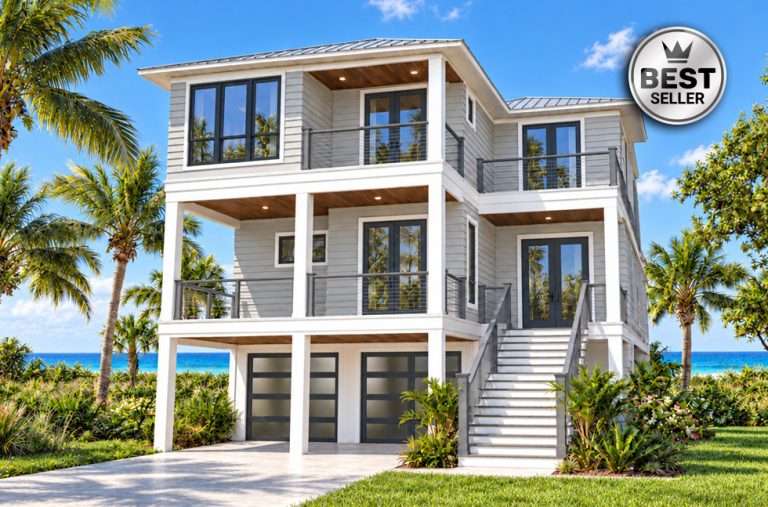
Our Hampton Bay plan is a good example of a coastal design that can work in either a primary or vacation setting. It combines an open plan, a main-floor primary suite, and abundant porches, giving the layout flexibility for everyday living or family getaways.
The key is not simply having more bedrooms. It is thinking about how those bedrooms will actually be used.
If four people will normally occupy the house but twelve people arrive for one week each summer, you may not want to design the entire house around those twelve people.
That can lead to a lot of square footage sitting unused for most of the year.
How Much House Do You Actually Need?
This is one of the easiest places to overspend.
Coastal land can be expensive, and coastal construction can require specialized foundations, wind-resistant materials, elevated utilities, and other features that add to the cost of the project.
Adding another 500 or 1,000 square feet therefore does more than increase the cost of the house itself.
It can increase the size of the foundation, roof, HVAC system, electrical system, and amount of exterior material. It can also increase your future maintenance and insurance costs.
The research used for this article estimates that coastal construction can run significantly higher than comparable inland construction, although actual costs vary substantially by location and site conditions.
For a vacation home, the question becomes particularly important.
If you are only going to use the house for several weeks or a few months a year, spending heavily on rooms that sit empty most of the time may not make sense.
On the other hand, if you expect the home to become a future retirement residence, building with that transition in mind could justify additional space.
The goal is not to build the smallest house possible.
It is to pay for the space you are actually going to use.
Financing Can Change the Decision
The way you finance the property can also be different depending on whether it is your primary residence or a vacation home.
The supplied research notes that primary residences can have access to lower-down-payment financing programs, while vacation and second-home purchases generally require higher down payments and can have stricter lending requirements.
That distinction matters when you are building from the ground up.
You need to think beyond the price of the house plan or construction contract. Land, site preparation, engineering, permits, utilities, insurance, and financing costs all become part of the project.
A vacation home also needs to fit comfortably into your finances even when it is not producing rental income.
If your plan is to rent the property when you are not using it, treat that income as a potential offset to expenses rather than assuming it will automatically cover the mortgage.
Rental income comes with its own costs, including management, cleaning, maintenance, taxes, and periods when the property is vacant. Local short-term rental regulations can also affect whether the strategy works at all.
Insurance Is a Bigger Part of the Budget Than Many Buyers Expect
Coastal homeowners have another expense that should be considered before choosing a plan: insurance.
Flood and wind exposure can make coastal insurance considerably more complicated than insurance on an inland home. The research notes that flood insurance requirements can apply to homes in high-risk flood areas with federally backed mortgages, while wind coverage and deductibles vary by location and insurer.
This is important because insurance is not just an annual bill.
It can affect what you can afford to build in the first place.
A larger, more expensive home may require more coverage. A home with features that improve storm resistance or elevation may have different insurance considerations than a less resilient design.
Before finalizing a house plan, it is worth getting actual insurance estimates for the property and discussing the proposed construction with an insurance professional.
Do not wait until the house is already designed to find out that the ongoing cost is higher than you expected.
Vacation Homes Have a Maintenance Problem You Cannot Ignore
One of the biggest differences between a primary home and vacation home is what happens when nobody is there.
A primary home has someone around to notice problems.
If an air conditioner stops working, a pipe starts leaking, or a storm damages part of the house, there is a good chance you will know about it quickly.
A vacation home can sit empty for weeks.
That means you may need someone to check the property regularly, maintain the yard, monitor the HVAC system, respond to storms, and identify problems before they become expensive repairs.
Coastal homes already experience accelerated wear from salt air, humidity, UV exposure, and storms. The research suggests budgeting roughly 1.5 to 3 percent of the home’s value per year for maintenance, although actual costs vary significantly.
A vacation home adds another layer because it may require absentee property services.
This is one reason a simpler, lower-maintenance plan can sometimes make more sense for a second home.
You may love the idea of a massive three-story beach house with multiple decks, elaborate exterior features, and extensive landscaping. But every additional system and exterior surface is another thing that eventually needs to be maintained.
Think About the House When It Is Empty
This is an especially useful question for vacation-home buyers:
What does this house need to do when nobody is there?
That question can change your plan.
You may want a layout that makes it easy to shut down parts of the house when you leave. You may want durable flooring and finishes that do not require constant attention. You may want fewer complicated exterior features and easy access to mechanical systems.
Storage matters too.
A dedicated owner storage area can be useful if you plan to rent the home. You may not want guests using the same closets and cabinets where you keep your personal belongings.
Likewise, a lockable owner closet or storage room can be more useful than adding another decorative feature to the floor plan.
Rental Income Can Influence the Floor Plan
If your vacation home will also function as a rental property, the floor plan has another job: it needs to work for people who do not own the house.
That changes how you should think about bedrooms, bathrooms, kitchens, and outdoor spaces.
For example, having multiple bedrooms with easy bathroom access can be more useful to a rental property than having one enormous primary suite.
A bunk room can also make sense for a vacation rental because it can increase sleeping capacity without requiring another full bedroom.
Outdoor living can be particularly valuable because renters often choose coastal homes for the experience of being near the water. Covered porches, decks, outdoor showers, and convenient access to the beach or pool can affect how the house functions.
But do not design the entire house around maximum occupancy unless that is actually your goal.
A house designed to sleep 16 people may be less comfortable for the owners when only four people are using it.
The research estimates that professional rental management can consume roughly 8 to 12 percent of rental revenue before other cleaning and maintenance expenses.
That means the floor plan should work for you first if you expect to use the property yourself.
Primary Home or Vacation Home Can Affect the Location You Choose
The decision is not only about the house.
It is also about where you want to live.
A primary coastal residence needs to function as a home within a community. Access to groceries, healthcare, schools, employment, restaurants, services, and other everyday needs becomes much more important.
A vacation property can be more isolated.
You may actually prefer being farther from commercial areas if the property offers better views, more privacy, or easier beach access.
But that same isolation can become frustrating if you eventually turn the vacation property into your primary residence.
This is one reason it is worth thinking about your long-term plans before buying the lot.
A property that is perfect for a two-week summer vacation may not be the property you want to live on every day after retirement.
Coastal Regulations Apply Either Way
Whether the home is your primary residence or a vacation property, the coast does not care how often you use it.
Floodplain regulations, setbacks, elevation requirements, wind-resistant construction, environmental restrictions, and utility requirements can all affect the project.
That means you should evaluate the property before getting attached to a particular plan.
A beautiful house plan does not help if the lot cannot accommodate it.
The footprint, height, foundation, setbacks, driveway, drainage, and utilities all need to work together.
This is also where choosing a plan that can be modified can be valuable. Sometimes the best solution is not finding a completely different house. It is taking a plan with the right overall layout and adjusting it to fit the property.
At SDC House Plans, our plans are designed in-house and can be modified to fit specific needs, which gives homeowners another option when they find a design that is close but not quite right.
Build for the Future, Not Just the First Five Years
There is another question worth asking before you decide whether the property will be a primary or vacation home:
Could its purpose change?
A vacation home today could become your retirement home later.
A primary home could eventually become a rental property.
Your children may move out. Your parents may move in. You may start working from home. You may decide you want more space for grandchildren.
You cannot predict everything, and you should not spend money designing for every hypothetical situation.
But some flexibility is worthwhile.
A main-floor bedroom can be useful now and become an aging-in-place feature later. A home office can become a guest room. A bonus room can become a bunk room or recreational space. Storage can be converted or reorganized as your needs change.
The best plan is often one that can adapt without requiring a major renovation.
What Should Your Coastal House Plan Prioritize?
If this will be your primary residence, think about the things you interact with every day.
That may mean a practical garage, good storage, a useful laundry room, a dedicated office, comfortable bedroom placement, and an outdoor space that connects naturally to the main living areas.
If it will primarily be a vacation home, think about how people gather.
A large great room, generous kitchen, multiple bedrooms, convenient bathrooms, outdoor living areas, and flexible sleeping arrangements may matter more.
If it will also be a rental, think about durability and turnover.
Easy-to-maintain finishes, practical storage, accessible bathrooms, owner storage, and a layout that works for larger groups can all become more important.
And if you are not sure yet, choose a plan that gives you flexibility.
Our [Coastal House Plans] collection includes designs across a wide range of sizes, layouts, and styles, so you can compare different approaches before deciding how much house you actually need.
There Is No Need to Build a Vacation House Like a Resort
One final point is worth making.
Coastal architecture can make it tempting to keep adding.
Another bedroom. Another deck. Another bathroom. A larger kitchen. A rooftop terrace. A second living room.
At some point, more features stop making the house better and simply make it more expensive.
The best coastal home is not necessarily the one that looks most impressive in a rendering.
It is the one that works.
If you are living there year-round, it should make everyday life easier.
If you are visiting a few weeks a year, it should be comfortable, durable, and easy to maintain when you are away.
If you are renting it, it should work well for guests without becoming unnecessarily expensive for you to own.
Those are three different goals, and your house plan should reflect which one matters most.
Should You Build a Primary or Vacation Home?
If you want to live at the coast year-round and are ready to make it your home, a primary residence gives you the opportunity to design around your everyday routine, your community, and your long-term needs.
If you primarily want an escape, plan to use the property seasonally, or want the option of generating rental income, a vacation home may make more sense.
But the distinction does not need to be permanent.
A well-designed coastal home can serve different purposes over time. The important thing is to understand what you need from the house today, what you might need in the future, and how much you are willing to spend to get there.
Before choosing a plan, look closely at the lot, get realistic estimates for construction and insurance, think through maintenance when the house is empty, and be honest about how much of the space you will actually use.
At SDC House Plans, we offer coastal house plans for a wide range of lifestyles and property types. Whether you are looking for a year-round home, a family beach house, or a smaller coastal retreat, our collection gives you a place to start comparing layouts and features.
The goal is not to find the biggest coastal house you can build.
It is to find the house that makes the most sense for the way you plan to use the coast.